The Threshold — Coming and Going
Every doorway is a small border between inside and outside, sacred and ordinary, household and world. The tradition marks the crossing. Most modern households have forgotten to.

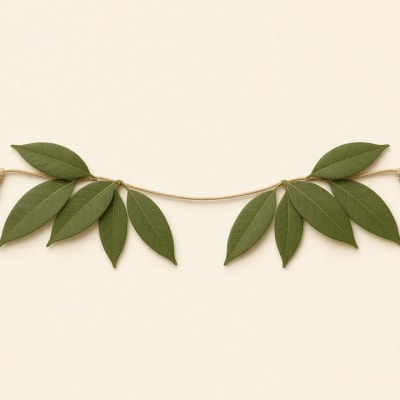
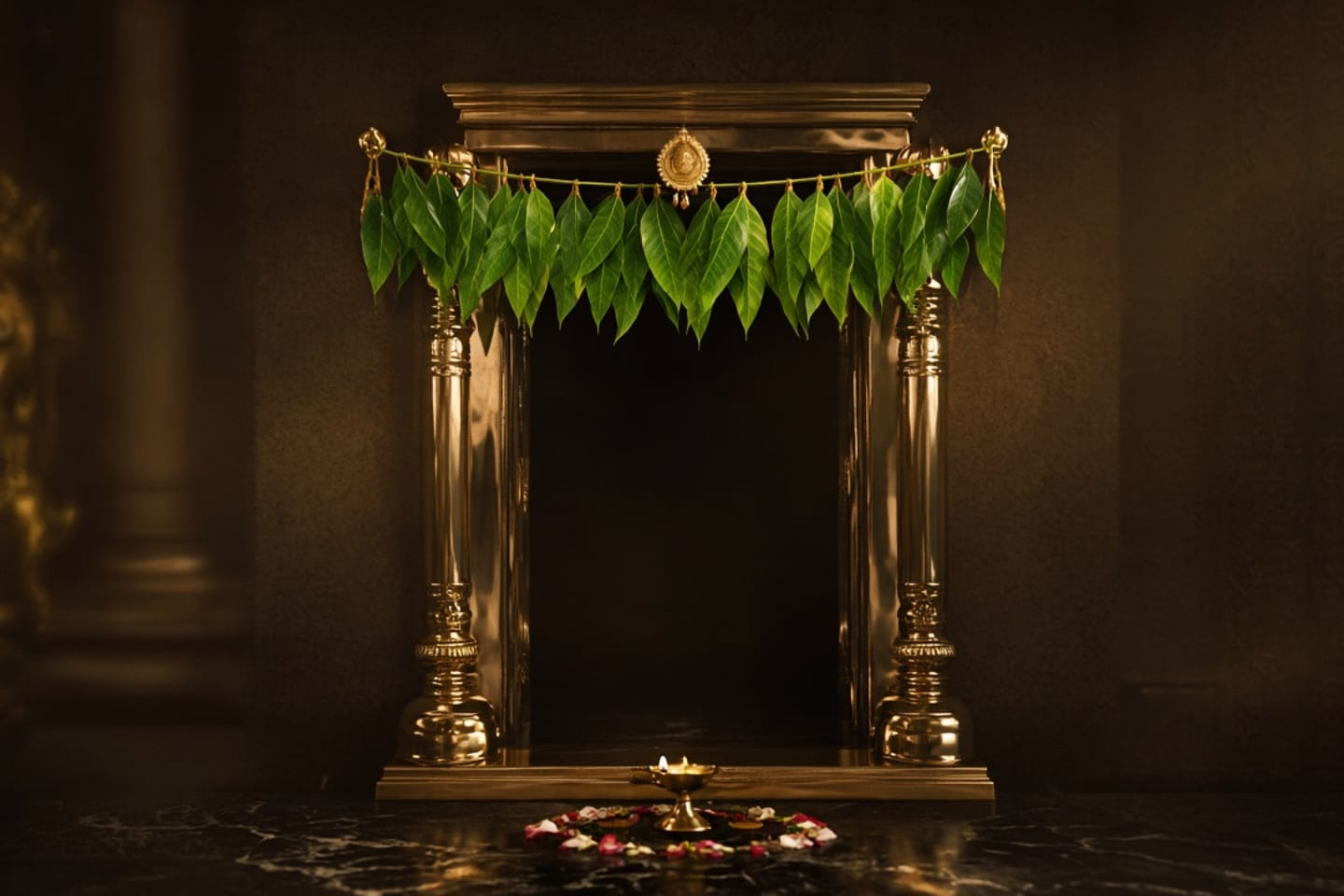
The threshold (dehleez/chaukhat) is a classical ritual boundary between the consecrated home and the outside world. Traditional practices: never step on the threshold, draw daily rangoli at the entrance, hang a toran above the door, place a kalash at the entrance during ceremonies, and light a diya at the doorstep at dusk.
Published · Updated · Chaitanya Global Research Team
The household door is not merely functional. In classical Indian tradition, the doorway is treated as a specific ritual boundary - the transition point between the household's inner devotional zone and the outer world. Crossing this boundary in either direction (leaving the home in the morning; returning in the evening) is understood as a small ritual moment that classical tradition marked with specific practices.
Modern practice has almost entirely lost this. The household member leaves for work by grabbing keys and closing the door. Returns home by unlocking the door and walking in. Neither crossing is marked. This chapter opens the classical threshold tradition - the small practices the tradition assigned to entering and leaving the household, and how modern practice can recover them without significant disruption.
Why the threshold matters
The classical understanding. The doorway holds specific classical status:
Vastu-purusha boundary. The classical Vastu (space architecture) tradition treats the household doorway as the point where the household's specific spatial-devotional character meets the general outer world. Crossing this point without acknowledgement is understood as small devotional carelessness.
Lakshmi's entry point. Classical tradition holds that Lakshmi (household prosperity) enters through the doorway. This is why doorways receive specific attention during Diwali (Lakshmi footprints drawn moving inward - see Vol 3 Ch 10). Every day carries a small continuation of this entry-tradition.
Yama's boundary. The doorway is also, in classical tradition, where inauspicious influences are traditionally kept from entering. This is why doorframes carry Om and Swastik plaques (Vol 5 Ch 10) - they are boundary-marking devotional presence.
Physical transition zone. Practically: what the household member brings inside (dust from outside, ambient noise, work-stress emotions) affects the household's continuous devotional atmosphere. The tradition's brief threshold practice is a small purification-transition.
The morning departure ritual
When the household member leaves home for the day (work, school, errands), the classical practice:
1. Approach the door from the mandir side. The classical understanding: the household member should leave home in devotional connection, not from other household zones. Even a brief pause at the mandir before departing carries this connection.
2. Brief acknowledgement of Ganesha. Whether physical (touching a small Ganesha plaque near the door) or mental (silent invocation), Ganesha - the obstacle-remover - is briefly acknowledged before any venture.
3. Touch of the household threshold. The classical practice includes physical touch of the doorframe or the floor immediately at the doorway. This small gesture marks the crossing.
4. Acknowledgement of household elders (if present). In traditional households where elders are present, the classical practice includes brief touching of the elder's feet (or hand-touching-elders' feet-then-touching-own-forehead as respectful gesture) before departing. This is pranipata - respectful salutation.
5. Brief mantra or intention. Silent internal invocation - a brief mantra (Om Namah Shivaya, Om Namo Narayanaya, or household-tradition mantra), or a brief silent intention statement.
6. Cross the threshold with the right foot first. Classical traditional practice: crossing with the right foot first (not left) is considered auspicious.
7. Brief looking back. After stepping outside, a brief moment of looking back at the household - final acknowledgement.
Duration: 30-60 seconds.
Modern reality. Most modern households have collapsed this entirely. The tradition can be recovered without significant time cost - even a 15-second modern practice restores something.
The evening return ritual
When the household member returns home from outside, the classical practice:
1. Pause at the threshold. Do not enter directly. Brief pause immediately outside the door.
2. Brief acknowledgement of the household's continuing devotional presence. Silent internal recognition: "I am returning to the mandir-continuous zone."
3. Cross the threshold. Right foot first (traditional).
4. Immediate hand-washing. Classical Indian household practice: entering the home from outside, the first act is washing hands and feet (or at least hands and face). The classical understanding: the outer world's dust and touch is removed before contacting household objects.
5. Change to household-clothes. Traditional practice includes changing from outdoor clothes to household clothes upon entering. The reasoning: outdoor clothing carries subtle contamination from outside environments; household clothes are ritually appropriate for the household's continuous devotional atmosphere.
6. Brief mandir acknowledgement. After hand-washing and clothing change, brief approach to the mandir before other household activity. Even a 30-second acknowledgement re-establishes the household member's connection to household devotional continuity.
7. Then engage in other household activity.
Total duration: 5-10 minutes of transition ritual before other activity begins.
Modern reality. Most modern households enter directly without any transition ritual - immediately checking phones, changing quickly and moving to other activity. The tradition observes this and honestly notes: significant devotional continuity is lost through this practice.
The classical children's threshold practice
Traditional households teach threshold practice to children from earliest possible age:
Small children:
- Taught to say brief "namaste" when leaving or returning
- Taught to touch grandparents' feet before departing
- Observed morning family threshold practice - internalises without formal instruction
Older children (school-age):
- Full classical practice adapted to age
- Small Ganesha touching before school departure
- Family blessing before major-event departures
Teenagers:
- Practice often lapses during adolescence
- Continuation depends on household culture; forced practice at this age rarely works
- Best inherited through years of previous consistency rather than teenage introduction
Young adults leaving parental home:
- Traditional practice: elaborate blessing ritual before departure to college, work, marriage
- Modern practice: reduced to brief blessing at airport/station or before major relocation
- The classical understanding: the departure blessing invests protective intent that continues through the young adult's subsequent life
Threshold-adjacent daily practices
Beyond the direct threshold crossings, several related classical daily practices:
Morning door-opening ritual. Traditional practice: opening the household door in the morning as a small ritual moment. The door is opened; the outer air is briefly welcomed; the household's outward-facing engagement with the world for the day begins. Brief acknowledgement of dawn is possible here.
Evening door-closing ritual. Traditional practice: closing the household door at nightfall as a small ritual moment. The door is closed; the household's night rest begins; the household's inner devotional atmosphere is preserved for the night.
Rangoli at the threshold (see Vol 3 Ch 10 and Vol 6 Ch 9). Traditional practice includes drawing rangoli at the household doorway daily (or weekly, or at specific occasions). This is threshold-marking through visible art.
Threshold cleaning as devotional practice. Traditional practice treats the household threshold as receiving specific attention during daily cleaning - swept, mopped, sometimes anointed with turmeric paste or specific traditional preparations.
Threshold practices at specific moments
Grihapravesh (see Vol 7 Ch 7): The elaborate threshold ceremony that establishes the household's continuing devotional presence in the space. All subsequent daily threshold practice is understood as continuing what grihapravesh established.
Diwali eve: Elaborate rangoli + Lakshmi footprints drawn at threshold moving inward + oil lamps placed at threshold. See Vol 6 Ch 9.
Wedding (see Vol 7 Ch 8): Bride crossing threshold of new home with specific ritual materials - a distinct classical practice at the wedding's conclusion.
Guest arrival: Traditional welcome ritual at doorway - small brass thali with diya + kumkum + akshata used to greet significant guests at the threshold before they enter (aarti-thali welcome). Serious households maintain this practice for family elders and important guests.
Guest departure: Similar traditional practice - small blessing at threshold before guest departs.
Return from significant journey: More elaborate threshold ritual - brief aarti at doorway upon return from pilgrimage, long absence, or significant trip.
The tradition's reasoning - why threshold specifically
The tradition's classical reasoning for threshold practice:
Attention transition. The household member's attention state upon returning from work (potentially stressed, tired, ordinary) is different from the attention state appropriate to household devotional atmosphere. The threshold practice creates a small transitional pause that shifts attention state.
Physical purification. Outdoor dust, environmental contact, ambient influences accumulate through the day. The classical hand-and-face washing at return is small physical purification.
Devotional continuity marker. Explicit acknowledgement that entering the household is entering a specific devotional zone maintains the household's distinctive character. Without this acknowledgement, the household gradually becomes indistinguishable from any other space.
Small daily practice compounding across years. Two brief threshold practices per day (morning departure + evening return) = 730+ small devotional moments annually. Across a decade, this is 7300+ small daily-rhythm devotional acts. This is the classical understanding of practice-compounding.

Modern practical accommodation
For modern households considering restoring threshold practice:
Morning departure - 15 seconds:
- Brief pause at doorway
- Silent Om or brief mantra
- Cross with right foot
- Depart
Evening return - 30 seconds:
- Brief pause at doorway
- Cross with right foot
- Immediate hand-washing (already common practice)
- Brief mandir acknowledgement before other activity
Even this reduced practice reintroduces classical rhythm.
Realistic serious modern practice - 3-5 minutes:
- Morning: brief Ganesha acknowledgement + threshold touch + mantra + threshold crossing
- Evening: pause + threshold crossing + hand-washing + change to household clothes + brief mandir acknowledgement
This restores meaningful daily threshold practice within realistic time budgets.
“The threshold is a small daily ritual moment that modern practice has almost entirely lost. Recovering it costs the household 30-60 seconds daily. What it restores is significant - the specific quality the household maintains when its threshold crossings are acknowledged rather than incidental.”
Classical Indian tradition holds specific welcoming rituals at the household doorway. Worth understanding both for households wishing to restore them and for households simply wishing to observe classical hospitality tradition:
Padya - the water for washing feet. Traditional practice welcomes significant guests with a small brass container of water for foot-washing at the doorway. Rare in modern urban practice but preserved in some traditional South Indian and North Indian rural households.
Arghya - the water offering. Small brass container of water is briefly offered to the guest as ritual welcome. Continues in most traditional households in ceremonial form.
Achamana - the sipping water. Small water offered for ritual sipping. Traditional in serious brahmin-tradition households.
Aarti thali welcome. Small brass thali with diya, kumkum, akshata briefly waved before the guest's face at the doorway. Aarti-thali welcome is traditional for family elders returning from significant journey and for particularly honoured guests.
Small tilak marking. Traditional practice includes marking the guest's forehead with small tilak (turmeric-kumkum paste). This is aunt/mother tradition - typically applied by the household's senior female member.
Small sweet offering. Traditional practice offers small sweet to the guest at the doorway - misri, small piece of ladoo, small sweet-water offering. Universal Indian hospitality practice.
Blessing acknowledgement. The guest acknowledges the welcome with brief blessing gestures - namaskaram, blessing the household, brief thanks.
Modern practice has largely reduced these to informal welcome (embracing, brief conversation) rather than ceremonial threshold ritual. Neither is wrong; the classical understanding is that formal welcome tradition, where maintained, holds specific devotional quality that informal welcome lacks.
For a household wishing to restore some formal welcome tradition, starting with aarti-thali welcome for family elders returning from significant journey or arriving for major festivals is the classical starting point.
Published by the house of Chaitanya · www.chaitanya.global
Kits & products from this chapter
Available wholesale, or under your own label.