Deepavali means the row (avali) of lamps (deepa), and the name is meant literally. Diwali is a five-day sequence with one main night at its centre: Lakshmi Puja on the new moon of Kartik, when the household holds the greatest concentration of ritual flame it holds all year.
Ganesha is installed first, even in a Lakshmi-focused ceremony. A kalash is established with water and a silver coin, the puja is performed in the evening, and clay diyas are lit in rows at the threshold, terrace, balcony and windows.
The five days of Diwali
| Day | 2026 | 2027 |
|---|---|---|
| Dhanteras | ||
| Naraka Chaturdashi | ||
| Lakshmi Puja (Diwali) | ||
| Govardhan Puja | ||
| Bhai Dooj |
Diwali samagri checklist
Lakshmi and Ganesha
- Lakshmi and Ganesha murti pair, or a framed image (brass, silver or panchaloha)
- Small silver or brass Lakshmi pada (footprints) for the threshold
- Red silk or cotton cloth to drape at the mandir base
- Red chunari for the Lakshmi murti
- Small silver coin
Kalash
- Copper or silver kalash (a small one is fine for the home)
- Water, mango leaves, coconut and red thread for the Poorna Kalash
- A silver coin placed in the kalash water
Flowers
- Red flowers: lotus if available (Lakshmi’s flower), rose, hibiscus, red marigold
- Red-and-yellow marigold garlands for the murti
- Yellow marigold for the rangoli borders at the door
Diyas and oil
- Clay diyas: 21 (the minimum), 51 (standard) or 108
- Mustard oil for the clay diya rows (coconut oil in South Indian homes)
- Cow ghee for the mandir Lakshmi diya
- Panchamukhi (five-wick) diya for the centre of the mandir
- Long cotton wicks for the longer-burning diyas
Puja samagri
- Chandan (sandalwood paste)
- Kumkum, sindoor and a small pot of haldi paste
- Akshata, tinted yellow with saffron
- Rose water
Prasad
- Kheer ingredients: rice, milk, sugar, cardamom, dry fruits, saffron
- Ladoo (boondi or motichoor)
- Fresh fruit, and two whole coconuts (one for the kalash, one to offer)
- Panchamrit ingredients
Rangoli
- White (rice flour), yellow (turmeric), red (kumkum) and green powders
For business households
- A red-cloth-bound account book (bahi-khata) and a red-ink pen
- A small silver Ganesha coin to place inside the book
The Diwali vidhi, in short
- MorningFinish the household cleaning, draw the rangoli at the doorway, and arrange fresh cloth and flowers in the mandir.
- Evening pujaEstablish the kalash with Ganesha and Lakshmi seated together. Light the panchamukhi diya, perform the Lakshmi puja with all offerings, then the aarti.
- Prasad and blessingOffer kheer, ladoo and fresh fruit. Business households open the new account book with a Swastik and the first entry, and the silver coin is blessed at the mandir.
- Row-lightingPlace the clay diyas at the threshold, terrace, balcony and windows and light them around sunset. The household gathers to share prasad; some keep a flame at the mandir through the night.
The Grantha’s position on firecrackers: they are an 18th–19th century addition, and the classical Diwali is flame-based, not explosive. Chaitanya does not stock them.
Read more in the Chaitanya Grantha
- Vol 7 · Chaitanya Ritual Kits Guide · Ch 5 The Diwali Kit The complete Diwali kit, the main-night sequence and regional variants
- Vol 8 · Chaitanya Festival Calendar · Ch 7 Kartik — Diwali Month Kartik month: the five days of Diwali, Karwa Chauth and Chhath
- Vol 6 · Chaitanya Diya & Flame Guide · Ch 9 Diwali — The Festival of Lights Diwali diyas: where the rows go and how many to light each day
- Vol 3 · Chaitanya Samagri Guide · Ch 10 Samagri × Puja — The Moment Guide Samagri lists for every major puja of the year
For retailers: the Diwali kit
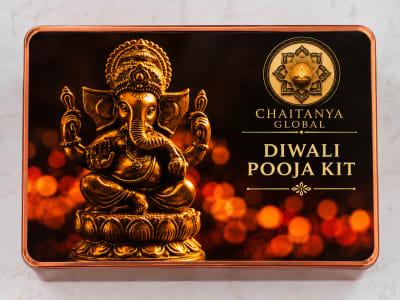
Diwali Lakshmi Poojan Kit
Everything for the Diwali puja, assembled in one box for grocery chains, importers and distributors. Private label available.